
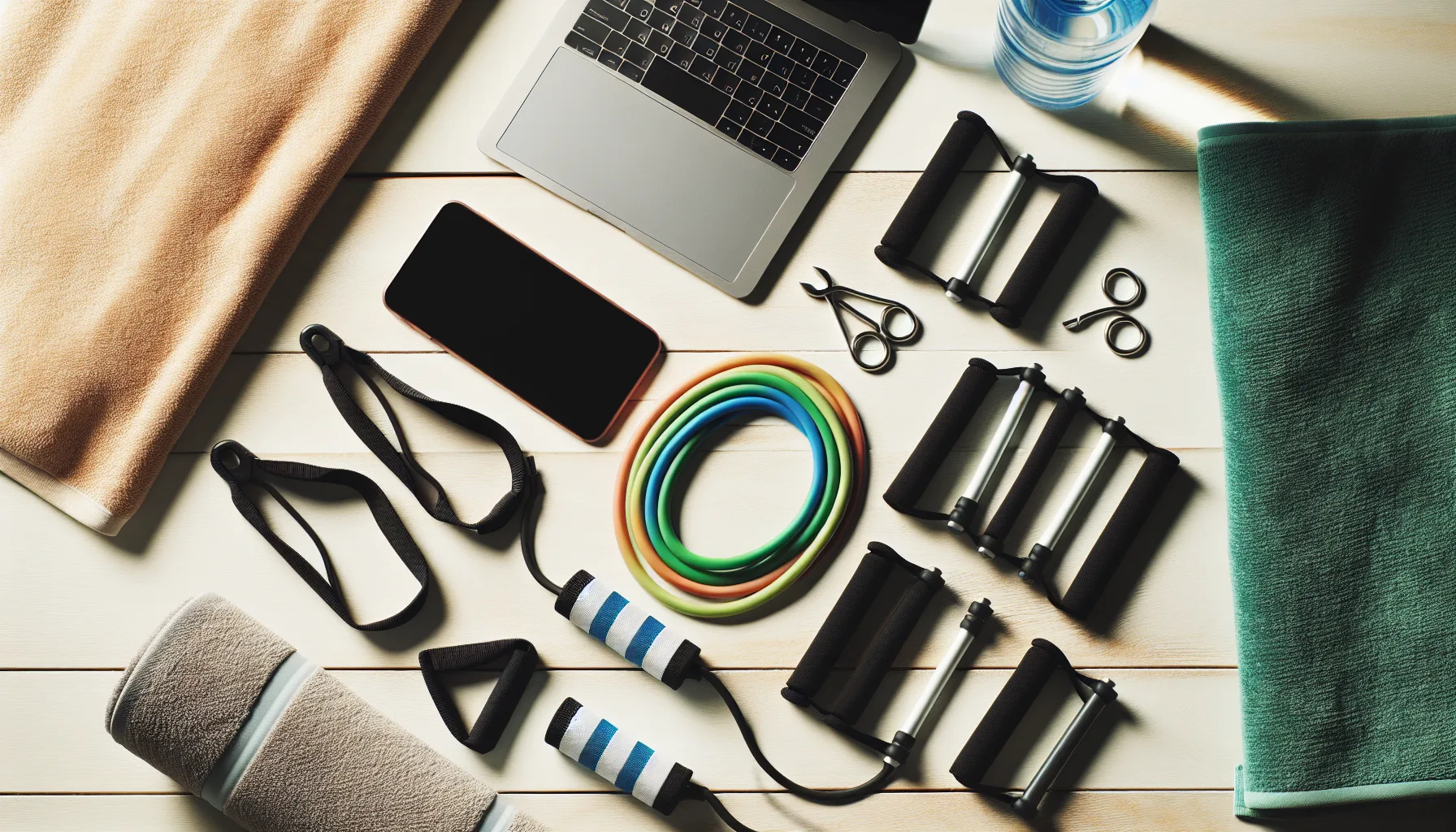
If you’re looking for a budget-friendly, versatile tool to accelerate fat loss, resistance bands for weight loss deserve a top spot in your fitness arsenal. Lightweight, portable, and surprisingly effective, resistance bands can help you build lean muscle, boost your metabolism, and torch calories — all without a gym membership. Whether you’re a complete beginner or a seasoned home gym enthusiast, the right band can transform your workouts.
Key Takeaways
- Resistance bands build lean muscle, which increases your resting metabolic rate and helps burn fat long-term.
- Loop bands, tube bands with handles, and fabric booty bands each serve different training goals.
- A 2022 study found resistance band training produces comparable muscle strength gains to free weights.
- Pairing band workouts with a calorie-conscious diet maximizes weight loss results.
Why Resistance Bands for Weight Loss Actually Work
Many people underestimate how hard resistance bands can make your muscles work. Unlike fixed-weight dumbbells, bands create variable resistance — meaning the tension increases as you stretch the band, forcing your muscles to work harder through the full range of motion. This leads to greater muscle fiber recruitment and, over time, more lean muscle mass.
More lean muscle means a higher resting metabolic rate (RMR) — the number of calories your body burns just to keep you alive. A 2022 review published in the Journal of Sports Science and Medicine confirmed that resistance band training produces muscle strength and hypertrophy gains comparable to traditional free-weight training, making it a legitimate fat-loss tool. If you’re also working on the best exercises for weight loss at home, adding bands is one of the smartest upgrades you can make.
Resistance Training vs. Cardio for Fat Loss
Cardio burns calories during the session, but resistance training builds the metabolic engine that burns calories around the clock. Combining both is the gold standard. Resistance band circuits can also double as cardio when performed at high intensity with short rest periods — similar in effect to HIIT workouts for beginners.
Types of Resistance Bands: Which Is Best for You?
Not all resistance bands are created equal. Here’s a breakdown of the most common types and their ideal uses:
| Band Type | Best For | Resistance Range | Price Range |
|---|---|---|---|
| Loop Bands (Mini Bands) | Glutes, hips, lower body | 5–50 lbs | $10–$25 |
| Tube Bands with Handles | Full-body, arms, shoulders | 10–150 lbs | $15–$40 |
| Fabric Booty Bands | Glutes, thighs, hip abduction | 15–40 lbs | $12–$30 |
| Flat Therapy Bands | Rehab, stretching, warm-up | 3–25 lbs | $8–$20 |
| Figure-8 Bands | Upper body, chest, arms | 10–30 lbs | $10–$20 |
Our Top Picks in Each Category
- Best Loop Bands: Fit Simplify Resistance Loop Exercise Bands — comes in a set of 5 resistance levels, durable latex, and ideal for squats, glute bridges, and lateral walks.
- Best Tube Bands with Handles: Whatafit Resistance Bands Set — stackable up to 150 lbs, includes door anchor and ankle straps for versatile full-body workouts.
- Best Fabric Bands: Peach Bands Resistance Set — thick, non-slip fabric that stays in place during intense lower-body sessions without rolling or snapping.
- Best Budget Pick: Black Mountain Products Single Resistance Band — affordable, heavy-duty, and great for beginners starting with one resistance level.
- Best Premium Pick: Gorilla Bow Portable Home Gym — a bow-style band system that mimics barbell movements and offers up to 200 lbs of resistance.
How to Use Resistance Bands Effectively for Weight Loss
Owning resistance bands is just the start — using them with intention is what drives results. A 2023 study in the International Journal of Exercise Science found that structured resistance training programs (3 days per week, 45–60 minutes) led to significantly greater fat mass reduction compared to unstructured activity. Here’s how to build a program that works:
- Choose the right resistance level. You should be able to complete 10–15 reps with good form, but the last 2–3 reps should feel challenging. If it’s too easy, size up.
- Focus on compound movements first. Exercises like banded squats, deadlifts, rows, and chest presses recruit multiple muscle groups and burn more calories per set.
- Use progressive overload. Gradually increase resistance, reps, or sets over time to keep challenging your muscles and avoid plateaus. If you’ve hit a plateau, check out these proven strategies to break a weight loss plateau.
- Keep rest periods short. Resting 30–60 seconds between sets elevates your heart rate, turning strength training into a calorie-burning circuit.
- Train at least 3 days per week. Consistency is the single most important factor for long-term fat loss and muscle retention.
Sample 20-Minute Resistance Band Workout
- Banded Squats — 3 sets x 15 reps
- Glute Bridge with Band — 3 sets x 20 reps
- Banded Bent-Over Row — 3 sets x 12 reps
- Standing Bicep Curl — 2 sets x 15 reps
- Lateral Band Walk — 2 sets x 20 steps each direction
- Banded Push-Up — 2 sets x 10 reps
Maximizing Results: Diet and Recovery
Even the best resistance bands for weight loss won’t deliver results without supporting habits. Exercise accounts for roughly 20–30% of your total daily energy expenditure — what you eat matters enormously. A calorie deficit remains the core driver of fat loss. Pairing your band workouts with nutrient-dense, high-protein meals accelerates muscle building and keeps hunger in check. For practical meal ideas, explore these high-protein low-calorie meals ready in 30 minutes.
Recovery Matters Too
Muscles grow and fat is metabolized during rest, not during the workout itself. Prioritize 7–9 hours of quality sleep per night, stay hydrated, and allow at least one rest day between sessions targeting the same muscle group. Chronic stress can also stall fat loss by elevating cortisol — a hormone linked to fat storage, especially around the midsection.
Resistance bands are one of the most accessible, science-backed tools available for sustainable weight loss — and they work for virtually any fitness level or budget. Start with a quality set, build a consistent routine, and pair your workouts with smart nutrition to see real results. The best band is the one you’ll actually use, so pick a type that excites you and get moving.
Frequently Asked Questions
Can resistance bands really help you lose weight?
Yes. Resistance bands build lean muscle mass, which raises your resting metabolic rate so your body burns more calories even at rest. Combined with a calorie-conscious diet, regular band workouts can lead to meaningful fat loss over time.
How often should I use resistance bands for weight loss?
Aim for 3 to 4 sessions per week, each lasting 30 to 60 minutes. Allow at least one rest day between sessions targeting the same muscle group to support recovery and muscle growth.
What resistance level should a beginner start with?
Beginners should start with a light to medium resistance — typically 10 to 25 lbs. You should be able to complete 12 to 15 reps with proper form, with the last few reps feeling genuinely challenging but not impossible.
Are resistance bands as effective as weights for fat loss?
Research suggests resistance bands produce comparable muscle strength and hypertrophy gains to free weights, making them equally effective for building the lean muscle that drives fat loss. They’re especially convenient for home training.
Which type of resistance band is best for beginners?
A set of loop bands or tube bands with handles is ideal for beginners because they come in multiple resistance levels, are affordable, and cover a wide range of exercises from squats to rows to bicep curls.